
Responsible unit
Test a realistic task: find the unit serving a specific region and send an enquiry to its team. Identify where group-level information ends, who owns the local page and where an enquiry goes when several units share a service.

Does a regional enquiry reach the responsible unit?
When two subsidiaries cover the same product, let the visitor choose a location or application rather than asking them to recognise legal company names. Check that both paths reach the intended local team.
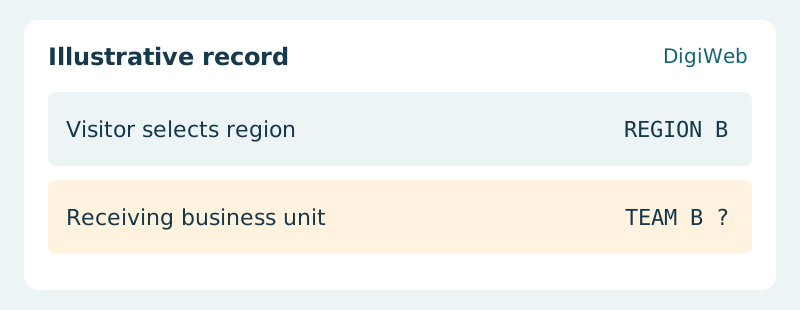
Acceptance evidence · Receiving business unit
Simulate renaming a subsidiary. Count the menus, pages, documents and language versions that must change. Store shared identity and contact routing in an owned reference so that an organisational change does not leave conflicting information online.
Review one service-finding journey and your business-unit list with DigiWeb