
Start with what the website does for the business
A corporate profile site, a portal shared by several divisions and a system that takes enquiries around the clock serve different purposes. Sending a URL and asking for a monthly price rarely produces comparable quotes. The technical team needs to know which functions must stay available, who maintains the content and which services connect to the site.
Describe how the site is used. Sales receives leads through a form, HR posts vacancies, and branches update their own information. Two sites with the same number of pages may require very different checks and coordination. Assess the fee alongside the work involved and the business impact if that work is missed.
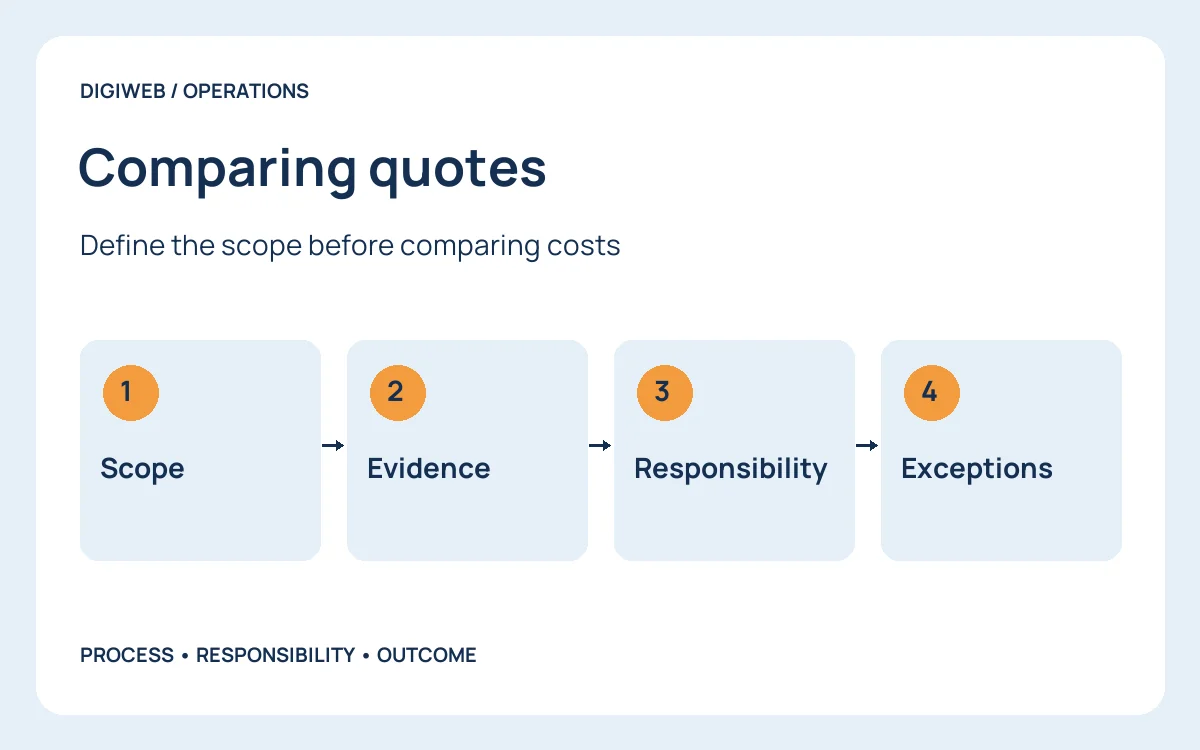
Separate four types of cost before comparing quotes
Ask providers to distinguish scheduled maintenance, the initial backlog, new development and third-party costs. A site that has received little attention may need an initial handover and assessment before routine maintenance can begin. Folding all outstanding fixes into a monthly fee without explaining how they will be handled can give both sides unrealistic expectations.
For the domain, hosting, licences and mail delivery service, establish who pays, when renewals fall due and how each item will be handed over. An item marked “included” is meaningful only when you know the conditions. Do not assume the maintenance fee covers infrastructure upgrades, new licences or additional features.
What to include in your comparison table
| Area to compare | Question to ask | What the answer should establish |
|---|---|---|
| Scheduled work | Which user journeys will be checked, and when? | Tasks, deliverables and limits |
| Incidents | Who receives reports, triages incidents and provides updates? | Point of contact and coordination arrangements |
| Changes | What counts as a minor fix? | The boundary between maintenance and development |
| Third parties | Who pays for licences and infrastructure? | Budget and ownership |
| End of the engagement | How will assets and work history be handed over? | Your right to continue operating the site |
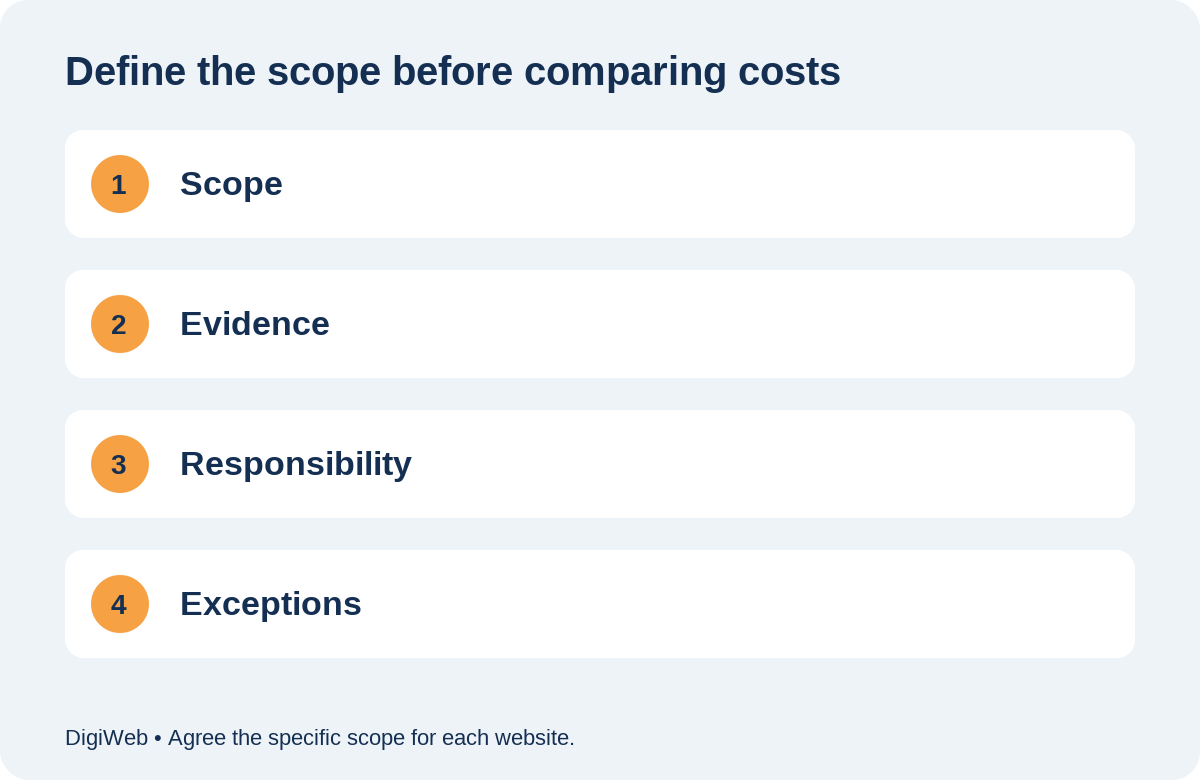
Look beyond the number of tasks. A “form check” could mean opening a page to inspect its appearance or confirming that a submission reaches the team that handles it. Ask to see a sample record of the result. A readable report with evidence is often more useful than a long list of technical terms.
An example of how two monthly quotes can differ
Suppose both proposals offer monthly maintenance. The first includes only software updates. The second also checks the enquiry journey, manages the backlog and tests the site after changes. Which is the better fit depends on whether your business has someone to handle the remaining work. This example is illustrative and does not represent a DigiWeb quote.
If you have an in-house technical team, outsourcing can fill a particular skills gap or provide backup cover. If nobody owns operations, a low fee with no provision for coordination may create substantial management work. Total cost includes the time staff spend chasing faults and verifying fixes.
Define support terms through real situations
Ask what “rapid support”, “bug fixes” and “unlimited” mean in practice. If a form stops accepting enquiries on a public holiday, how do you reach the provider? How does the response time differ from the time to restore service? If another supplier changes an integration, does the current scope cover the repair?
No single service commitment suits every website. Record important requirements in the contract or an appendix. If the provider has yet to examine the code and infrastructure, it should identify its assumptions and explain what might change the cost after taking over.
Give both providers the same scenario. A form reports a successful submission, but the sales team receives nothing. Ask who will check the website, who will check the mailbox, what evidence will close the incident and which work carries a separate charge.
Choose a proposal that keeps the business in control over time
A suitable proposal identifies who owns each responsibility, how the work will be checked and how requests outside the agreed scope will be handled. What matters is the provider’s ability to manage changes and resolve problems while customers rely on the site. A promise that the site will never develop a fault offers little guidance when one occurs.
Use our guide to the differences between website maintenance, content management and feature development to prepare your list before requesting quotes. When you contact DigiWeb, share the URL, the functions that matter to your business and any work that currently has no owner. That gives both sides a basis for agreeing how to work together.