
Choose a goal that guides design decisions
A corporate website might build credibility, generate enquiries, support recruitment or inform business partners. Each purpose calls for a different journey through the site. Rank those priorities early, or every department may try to put all its information on the homepage.
“Help prospective customers understand what we can do and send an enquiry that explains what they need” is more useful than “raise our brand profile”. It gives the team a basis for deciding what claims need evidence, what content to prepare and what the form should ask. Distinguish revenue and SEO ambitions from design work you can test and sign off.
Describe your audiences and the questions they bring
A buyer looking for a supplier, a job applicant and a shareholder come to the site with different questions. Write those questions down: What does the company do? Has it handled work like ours? Where does it operate? Which team should I contact? There is little value in drafting elaborate personas without reliable information to support them.
Sales and support teams can identify questions they hear repeatedly. Summarise examples so the brief does not expose customers’ private information. If something is still an assumption, flag it for investigation during the project rather than presenting it as a finding.
Take stock of your content and supporting evidence
| Content area | What to clarify |
|---|---|
| Brand | Logo, brand guidelines and approved messaging |
| Capabilities | Services, projects and the scope of work you may disclose |
| Images | Source, quality and usage rights |
| Languages | Translator, reviewer and update schedule |
| Enquiries | Receiving team, information to request and how enquiries will be handled |
Missing content can change the structure and presentation of a site as well as delay production. If projects are meant to demonstrate capability, establish which ones you may name, what original photographs are available and which parts of the work your company can claim.
Define the scope of features and integrations
Describe each feature in terms of its user and intended outcome. “Find a document by type and language” gives a supplier more to work with than “include search”. “Route an enquiry to the right department and confirm receipt” is more precise than “add a contact form”. This also gives the supplier a basis for estimating testing and cost.
Identify connections to CRM, recruitment platforms, maps or proprietary systems from the outset. If API documentation or a technical contact is missing, record that dependency for investigation. Writing “full integration” in a brief does not establish which connections the price includes.
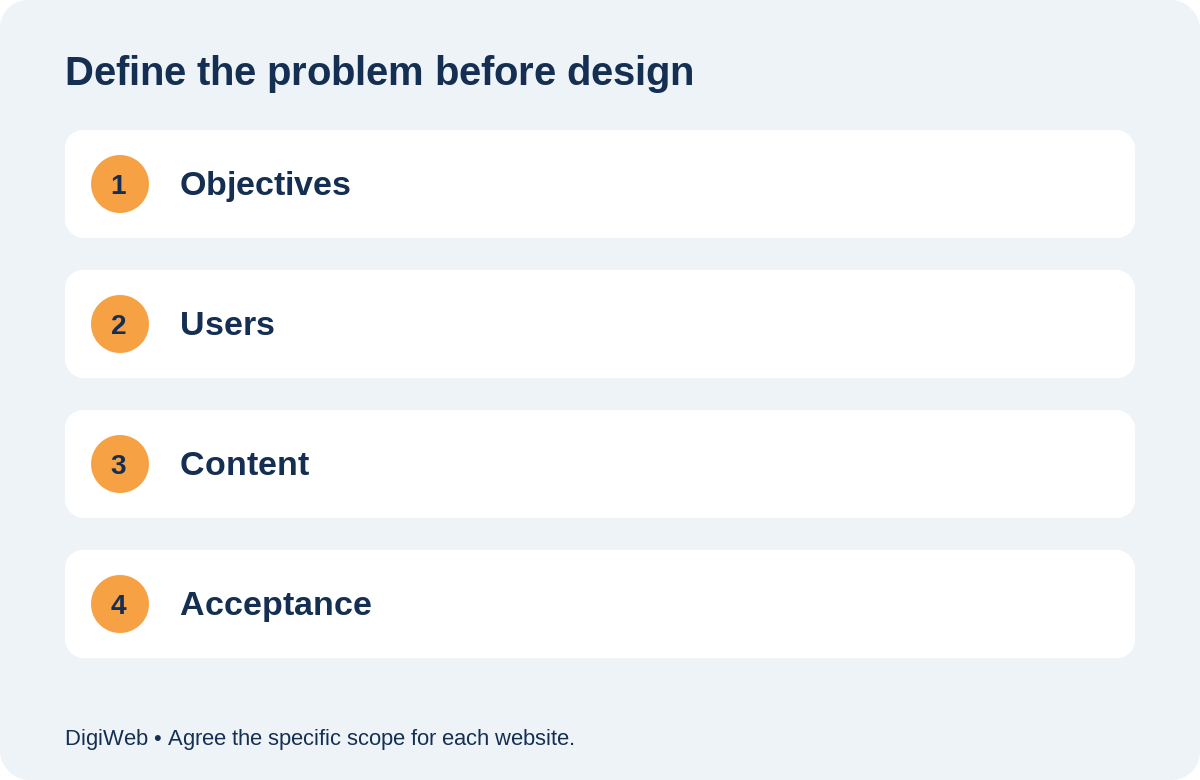
Assign reviewers and agree on acceptance criteria
Decide who approves content, who makes design decisions and who signs off the technical work. Input from several people is normal. Agree on how to consolidate their comments so suppliers do not receive contradictory instructions. Set feedback dates that reflect the time needed to prepare materials and the availability of everyone involved.
Acceptance criteria should cover customer journeys, devices, languages and the way editors manage content. Assess the visual design against brand consistency and clarity of information as well as individual preferences. The website will be in use long after the design presentation.
Describe a typical enquiry in the brief, from the moment a customer finds the service to the point where the responsible team has enough information to call back. Specify which content helps the customer decide, which fields are genuinely necessary and who owns the next step.
Plan for operations after launch
Set out who will update content, which changes need technical support and how handover will work. Include licences, assets, user documentation and maintenance responsibilities in the project scope. An attractive website that is difficult to edit can soon become inaccurate.
See how DigiWeb approaches premium website design grounded in brand identity. When sharing your brief, start with the business problem, the materials already available and the practical constraints. A suitable partner can help resolve the gaps before interface design begins.