
Identify the gaps the partner should fill
Internal IT may own infrastructure, accounts and business systems while marketing owns content and campaigns. The website sits between these responsibilities, making it easy for work to go unclaimed. Choose a partner to fill specific capability and delivery gaps, not merely to forward requests.
List the work that gets stuck: long-unresolved technical faults, requests that are hard to describe, missing tests or absent handover documents. This shows whether the gap is expertise, delivery capacity or coordination. An external partner need not replace the entire internal team.

Distinguish who requests, approves and implements each change
Marketing might raise a request, IT assess risk, a manager approve the budget and the partner implement it. Each role holds different information. Without a sequence and clear contacts, the technical team may receive conflicting instructions or wait without knowing who can approve the work.
The business should retain responsibility for objectives and commercial priorities. The partner should own the scope it accepts, the solution and the agreed test results. Document the division through real situations so everyone knows what to do when changes or incidents occur.
A compact responsibility table for common tasks
| Task | What to agree on |
|---|---|
| Publishing and editing content | Contributor, approver and publisher |
| Technical change | Proposer, approver and tester |
| Infrastructure and DNS | Account owner, operator and verifier |
| System integrations | Contact on each side and scope of responsibility |
| Incident | Coordination, status updates and recovery decisions |
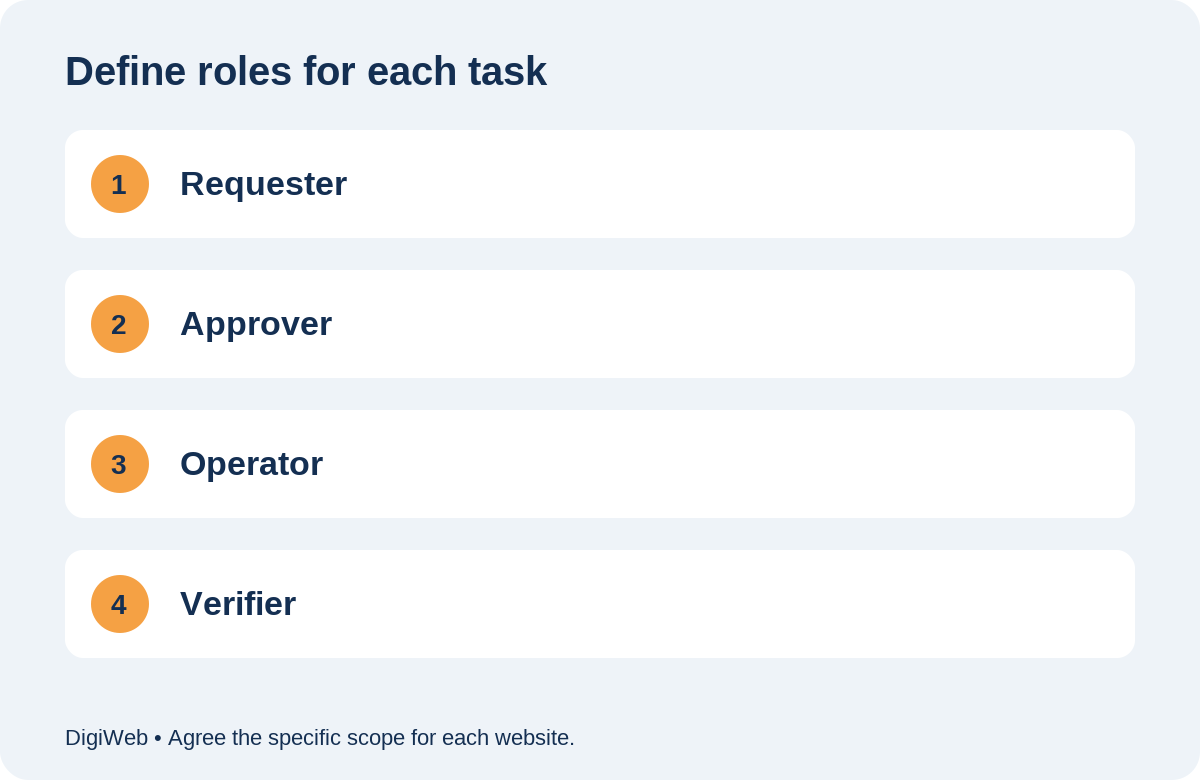
A responsibility table can be useful without elaborate management terminology. Every task needs someone to take it and someone empowered to decide. “The parties will coordinate” rarely resolves a request that is already stuck.
Standardise requests to reduce follow-up questions
A request should give the URL, symptoms, expected result, required timing and impact. For new functionality, add intended users, data and acceptance conditions. The partner must clarify missing information and explain when a request introduces additional scope.
Not every request needs a long specification. A fault can be described briefly if the description is reproducible. A new integration may require discovery. Classifying them at intake helps the business avoid assigning different types of work in the same way with identical expectations.
Keep documentation and access rights tied to each asset
Maintain an inventory of systems, ownership and significant changes. Grant the partner access appropriate to the work, and keep secrets out of reports and broad group conversations. Review temporary permissions under the agreed procedure when a task ends.
Documentation serves more than a future supplier change. It helps internal IT understand the environment, lets a replacement take over and reduces dependence on one person’s memory. Include handover documents in the agreed deliverables at a level of detail appropriate to the scope.
For each dependency, record who can decide, who can act and which channel confirms completion. IT may make a DNS change, for example, while verifying email afterwards requires both the mail administrator and a business user.
Assess the partnership by how effectively it resolves work
Check whether requests are classified correctly, outcomes are verified and backlogged work has an owner. Message and meeting counts alone say little about effectiveness. Recurring problems should trigger changes to the process or scope instead of further exchanges between teams.
Use our guide to the different types of website work to agree on responsibilities. Tell DigiWeb what your internal team already owns and where it needs support so both teams can plan a workable partnership.