
Establish a baseline you can verify
Gather the main functions, administrative rights, platform, integrations and known faults. Distinguish verified information from areas still needing investigation. A roadmap built on broad assumptions can direct money away from the actual bottleneck.
These documents do not need to contain secrets. The business needs to see which departments the site supports, who decides and which assets it cannot yet control. Risks to enquiry handling or data should be assessed before cosmetic improvements.
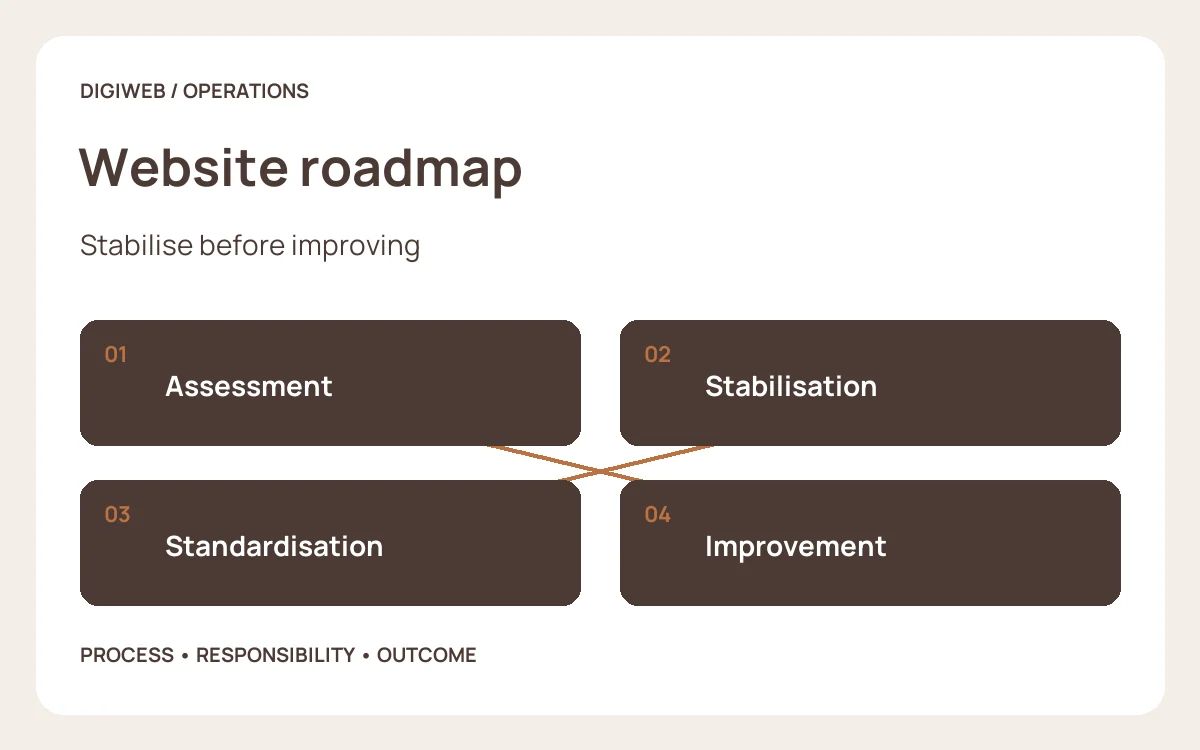
Group the work by risk and value
Start with work affecting continuity, such as broken core functions, unverified recovery or unclear administrative ownership. Next establish routine operational controls. Then evaluate improvements against business objectives and actual constraints.
The order is not a fixed formula. An imminent campaign can make one landing page urgent while a broader design change can wait. Explain why an item comes first and what happens if another is deferred.
Build a backlog with clear deliverables
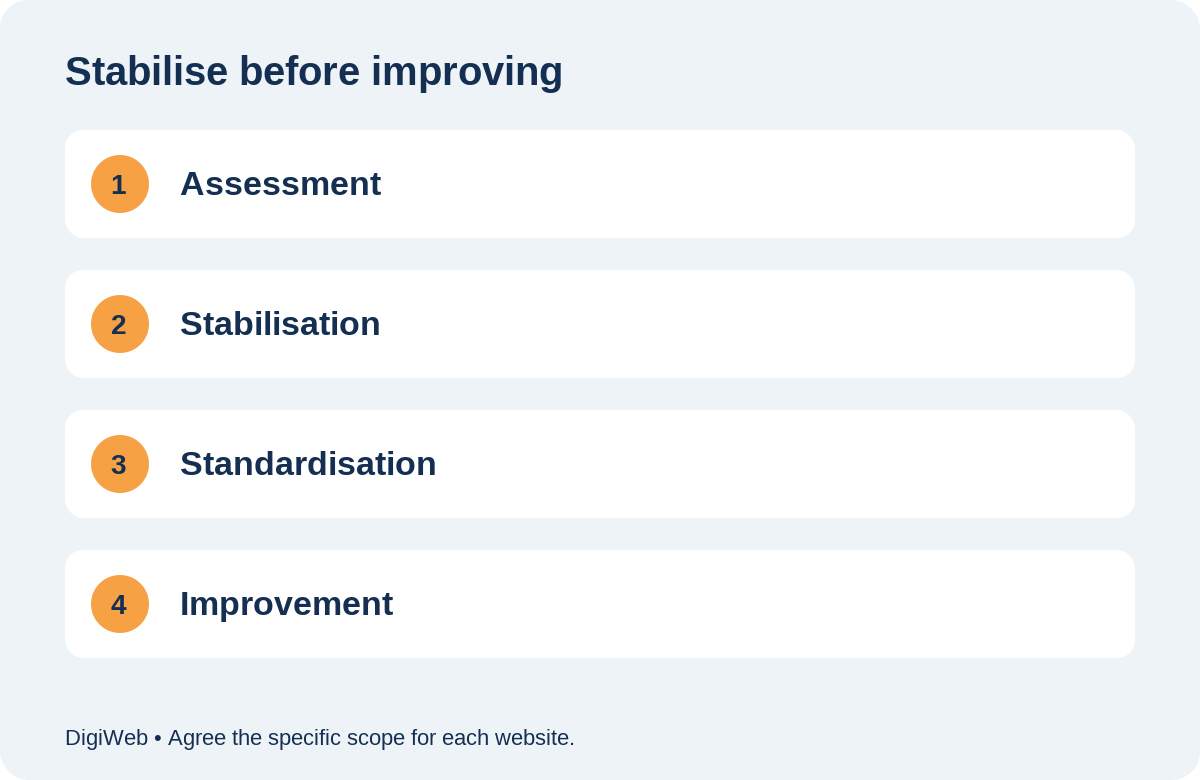
| Stage | What the business should receive |
|---|---|
| Assessment | Current state, gaps and items needing verification |
| Stabilisation | Critical functions tested and outstanding issues prioritised |
| Standardisation | Check schedules, access rights, reports and contacts |
| Improvement | Proposals with objectives, scope and acceptance criteria |
| Review | Results, limitations and an updated work list |
“Optimise the website” is too broad to estimate or accept. Identify a page, a user journey and a way to check the problem. If the cause is unknown, the first deliverable may be an assessment with a conclusion, before anyone commits to a particular improvement.
Separate operating and development budgets
A maintenance fee organises agreed ongoing work. Additional development may need its own scope and budget. Make licences, infrastructure and external services visible too. Separating these costs helps forecast long-term needs and reduces disputes when new requests arise.
There is no need to lock in every improvement for the entire year at the outset. Establish priority groups and decision conditions for each phase. Where an item depends on data or another system, record assumptions and a review date so an unexplored idea does not become an unintended commitment.
Revisit the plan as the business changes
A new service, business unit or source of customers can change the website’s role. Review tests, content and integrations accordingly. A plan left unchanged while the business evolves soon loses its value.
Review completed work alongside recurring issues. Repeated repairs to the same fault warrant investigation of the cause or an architectural limitation. If a feature sees little use, find out why before retiring it or investing more.
Define completion for each roadmap item. For backups, that might mean restoring a test copy and reconciling every selected data item. A specific condition tells the business when resources can move to the next priority.
Choose a partner who can help the business make decisions
Long-term value comes from understanding the system, explaining risk and proposing a justified next step. The business needs choices and their limits in addition to a list of closed requests. The partner also needs a well-informed contact who can help prioritise the right work.
Start with the website maintenance scope and the routine checklist. To build a roadmap with DigiWeb, share the URL, the site’s business role and the problems that are holding it back. These are more useful starting points than an unprioritised list of features.